How about low-risk drinking?
Your sleep won’t be impacted as much if you try low-risk drinking. You’ll also minimize the chance of other consequences from drinking.
What is low-risk drinking?

A major nationwide survey of 43,000 American adults indicated that only about 2 in 100 individuals are at risk of developing an alcohol problem if they meet both the single day and weekly drinking limits.
Source: Rethinking Drinking Alcohol and your Health, NIAAA
Keep in mind — Low-risk is not no risk. If you take medications that interact with alcohol, have a medical or psychological condition that is made worse by drinking, or are planning to drive, it is safest to avoid drinking.
How do you feel at different Blood Alcohol Content (BAC) levels?
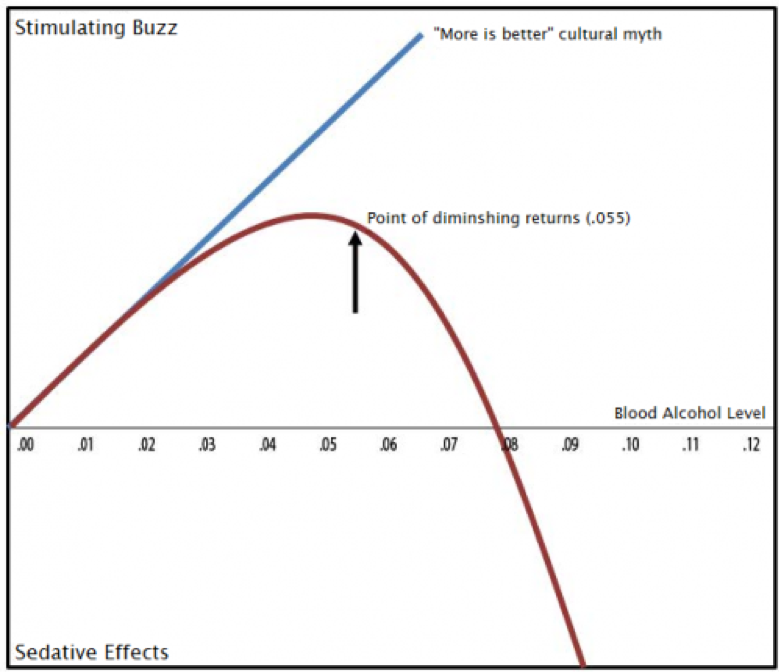
A social drinker is a low-risk drinker. For the average social drinker, the effect of alcohol is directly related to BAC. The chart below shows the behavioral effects you can expect to experience at increasing BACs as a social drinker.
As you can see from the chart, a few drinks will make you feel good, but more drinks will make you feel worse not better. This is because alcohol has two major effects: a stimulating, or “up” phase and a sedating, or “down” phase.
What if you have a high tolerance level and can “hold your alcohol”?
Tolerance may disconnect your body from behavioral effects of BAC like impaired social judgment or physical reactions like vomiting, but it is still rising. It becomes harder for you to know how high your BAC really is.
PASSING OUT IS NOT “PASSING OUT”
At a BAC of 0.30, we note that many people lose consciousness. This is not the same as the common expression of “passing out” (i.e., falling asleep very quickly). Instead, it is a risk of death that involves your body slowing down respiration, heart rate, digestion and being unable to sustain conscious activity. Also, if you were to vomit, you would be at-risk for choking and not being aware of it.


